Williams operates the Transco pipeline, an approximately 10,000-mile natural gas transportation system that extends from south Texas to New York City. The Transco pipeline is the nation’s largest-volume natural gas pipeline system, transporting about one-third of the natural gas consumed in the United States.
Our region is experiencing growth, with demand for natural gas increasing by 43% since 2013, according to the U.S. Energy Information Administration. However, the infrastructure to deliver this gas to consumers has only increased by 25%. To gauge resident interest in expanding infrastructure, Williams commissioned a survey of 569 residents in the Triad and Southern Virginia.
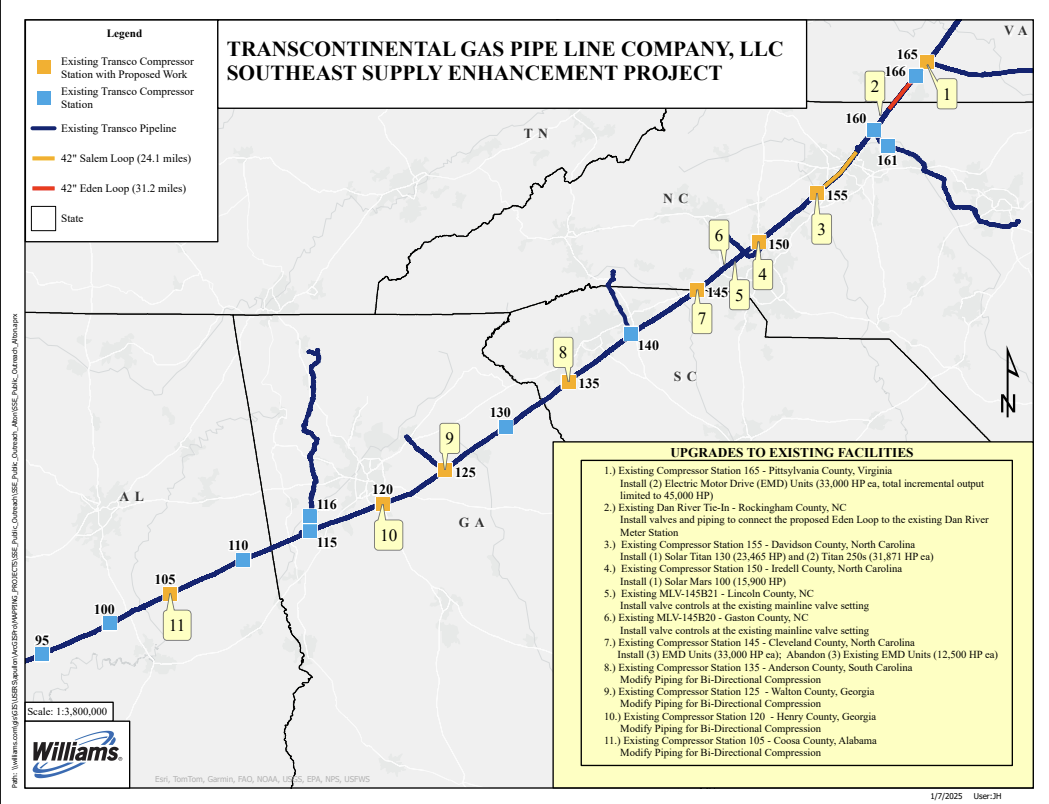
According to Williams, the proposed project is an expansion of the existing Transco pipeline’s capacity in the southeastern United States. The project will include pipeline looping adjacent to the existing Transco corridor and modifications to eight facilities. This expansion will provide reliable natural gas deliveries to Virginia, North Carolina, South Carolina, Georgia and Alabama to meet the growing residential, commercial and industrial demand in cities across the Mid-Atlantic and Southeast. This project will be regulated by the Federal Energy Regulatory Commission (FERC) under the 7(c) application filing process to ensure thorough consultation and cooperation with other state, local, and federal regulatory agencies, and community stakeholders.
North Carolina Scope of Work: A total of 28.4 miles of pipeline looping adjacent to existing Transco corridors located in Rockingham, Guilford, Forsyth and Davidson Counties and additional compressor units in Cleveland, Iredell, and Davidson Counties (Stations 145, 150, 155).
Project Map