
Asthma Fact Sheet.pdf
ASTHMA
Asthma is a chronic condition of the lungs where the airways become inflamed and restrict airflow into and out of the lungs. Symptoms may come and go based on “triggers” that cause the inflammation (see diagram below). When symptoms are active, it is called a “flare-up” or “asthma attack”. Sometimes symptoms are severe requiring emergency action. Medications can be prescribed to assist in maintaining a normal active lifestyle.
Signs and Symptoms:
- Wheezing
- Coughing or shortness of breath. May be worse during certain times of the year.
- Tightness or pressure in the chest
- Difficulty breathing with exercise or physical activity
Treatment:
- A doctor can prescribe prescription medications. Prescriptions may include a short acting “rescue” inhaler for emergency use and/or long acting medications to help reduce the number of flare ups.
- Your doctor will help you determine what triggers your asthma flare ups and will create a care plan to assist with management and treatment of your symptoms.
- During an asthma attack, you should try to relax in a comfortable position and do not panic. Administer your rescue inhaler if available. Drinking a caffeinated drink may help reduce symptoms also.
- Call 911 if symptoms worsen. Start CPR if breathing stops.
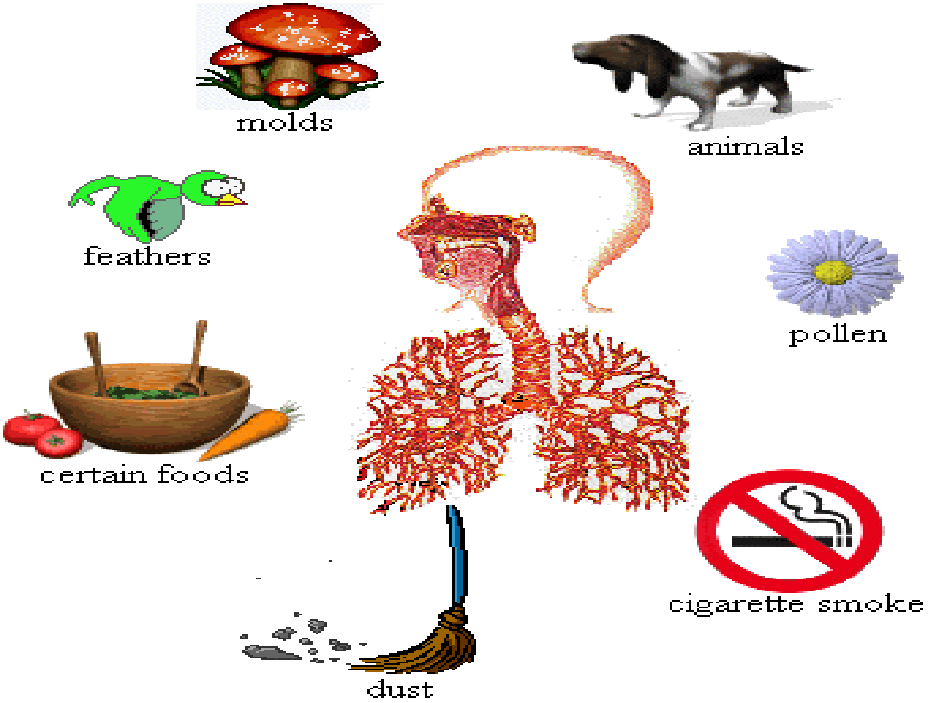
Figure 1 Common Asthma Triggers
On This Page Jump Links
On