
Establishing the policies, standards, and oversight structures that ensure data is used responsibly, consistently, and securely across Guilford County.
What Is Data Governance?
Data governance refers to the people, policies, and processes that guide how data is managed, used, and protected across the organization.
It ensures that data is:
- Trustworthy
- Consistent
- Secure
- Used responsibly
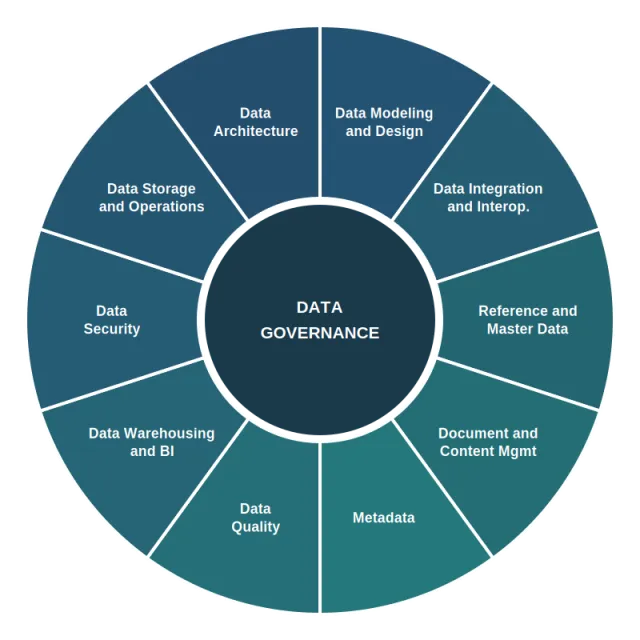
In practice, data governance touches nearly every aspect of how we work with data — from how it is defined and documented, to how quality is maintained, access is controlled, privacy is protected, and data is managed over time.
Learn more about the different components of data governance
Why Governance Matters
Strong data governance ensures that data is managed consistently, transparently, and with the community in mind.
It helps ensure that:
- Data has consistent meaning across departments
- Access is appropriate, consistent, and secure
- Privacy and confidentiality are protected
- Insights and analysis can be trusted
- Data assets are documented and maintained
- Data use is transparent to the public
- Privacy and security standards are clearly defined and accessible
What This Looks Like for Guilford County
Guilford County is building a shared data governance framework that establishes:
- Clear standards for how data is defined and used
- Defined roles and responsibilities across departments
- Consistent policies for data access, quality, and security
This work is closely coordinated with the Information Technology department, which maintains responsibility for:
- Infrastructure
- Security controls
- System administration
This approach helps ensure that data is well-managed and effectively used to serve residents.
How should data be structured inside systems?
Defines how data is organized and how different data elements relate to one another, creating a blueprint for how data is stored and used.
How is data exchanged and linked across system?
Ensures data can move between systems and that different technologies can communicate effectively.
What are the core records and definitions?
Maintains consistent definitions for key data (e.g., “client,” “address”) so information is standardized across departments.
How do we manage non-database information?
Manages documents and unstructured content to ensure they are accessible, organized, and usable.
What do we know about the data?
Documents data definitions, sources, and ownership so users can understand and trust the data.
Can we trust the data?
Ensures data is accurate, complete, and reliable, with processes to monitor and improve quality.
How do we analyze and report the data?
Brings data together to support reporting, analysis, and decision-making across the organization.
Who can access the data?
Defines how data is protected, who can access it, and how privacy and confidentiality requirements are met.